
Almost exactly 80 years from today, something unimaginable occurred, something those who went through it would suppress, and those who didn’t would never understand. After all, how do you understand something this extreme, something this monstrous? In August 1947, British India was divided into three parts: India, East Pakistan and West Pakistan.
Around three million were killed, over fourteen million people were uprooted, thousands of women were abducted, and there were rampant massacres, rapes, and suicides. Families had to abandon their ancestral homes, lands, documents, and jewellery behind in hopes of returning to get them back, only to find their futures in caravans and camps.
Gulzar, in the introduction to his novel Do Log (translated into English as Two), writes, “The First World War was eclipsed by the Second World War... but it took time for the Second World War to be forgotten. Thousands of films were made, and hundreds of thousands of books were written. By speaking about it endlessly in commentaries and seminars, Europe got everything off its chest.
And little by little, the Second World War became an old memory, entered the pages of history... and began to seem like something of the past. It has taken even longer to forget the Partition of Hindustan. Seventy years have passed, and even now, whenever we speak of independence, Partition is mentioned first.
History offers no other example of two peoples undergoing a migration on such an immense scale. But we sat upon those wounds, keeping them buried, and did not speak about them. We made no films, held no discussions, and never turned back to take stock of what had happened.”
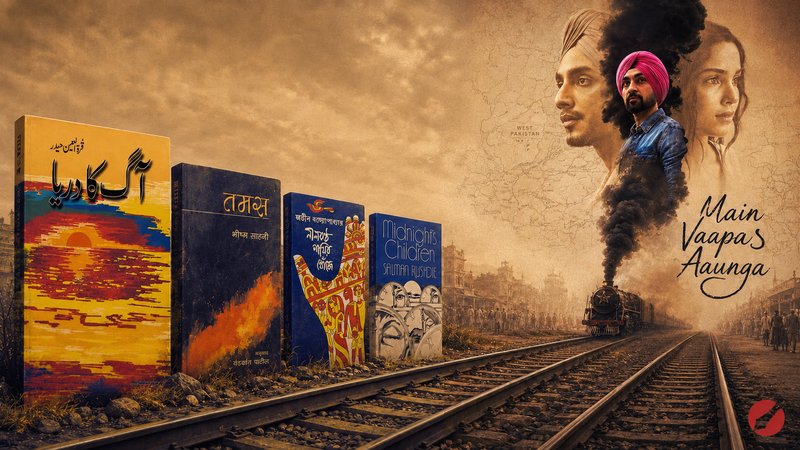
Imtiaz Ali’s Main Vaapas Aaunga is an attempt to take stock of what had happened. Through the stories of a Sikh boy and a Muslim girl in love — their love not strong enough to overcome the enormity of the hatred around them — he recreates a lost world, a lost country, a lost society, a lost humanity. But stories of partition there are many, some well-known, others not so much.
The following books on the Partition of India, spanning English, Hindi, Urdu, Punjabi, and Bengali literature, will take us on a journey through time and memories. Whether you're looking for a single partition of India book to start with or want to explore multiple partition novels across languages, this list of books about the partition of India covers fiction, oral histories, and anthologies alike. Most importantly, these books remind us never to forget, for to not forget is to not repeat.
1. Tamas by Bhisham Sahni
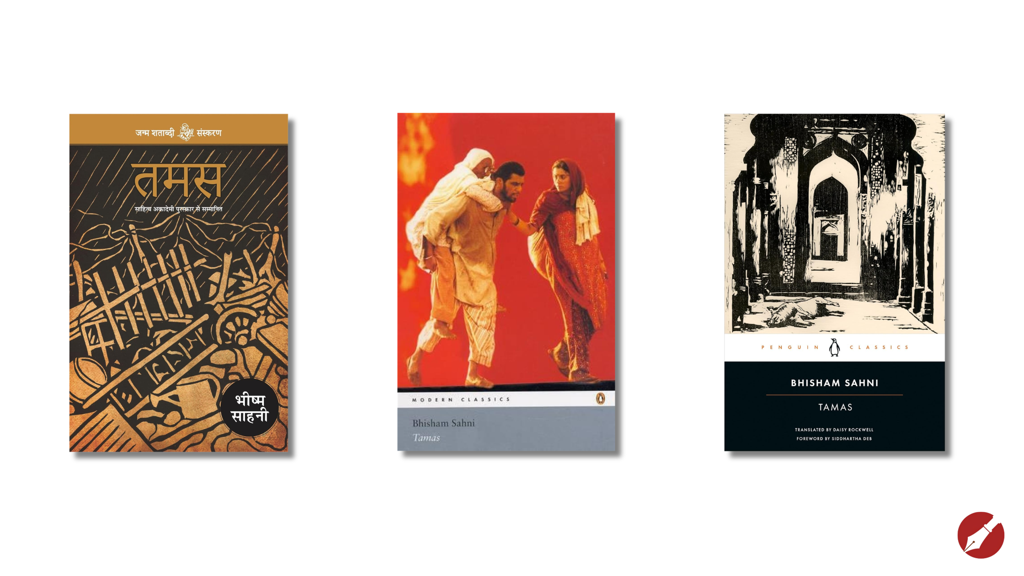
Published in 1974 in Hindi, Tamas by Bhisham Sahni is set right before the partition in a small-town frontier province. Sahni, who had witnessed the 1947 Rawalpindi riots, drew on accounts of the riots to pen this story. The book avoids communal finger-pointing, which has always been central to much of Partition discourse. After all, it’s the ordinary people across communities who suffered — and continue to suffer under political manipulators. It's this refusal to assign blame that has made Tamas one of the most notable partition novels in Hindi literature.
When a local politician deceives and bribes Nathu to kill a pig, its carcass reaches the mosque steps, and communal tensions erupt the next morning. Muslims attack Hindus and Sikhs, who retaliate violently. The British administrators eventually call the army, but it’s too late by then — trust amidst neighbours is gone, religious symbols are weaponised, families (especially women) are at the receiving end of brutality. Govind Nihalani’s adaptation of the novel would also become one of the key depictions of Partition in Indian storytelling.
2. Mottled Dawn: Fifty Sketches and Stories of Partition by Saadat Hasan Manto
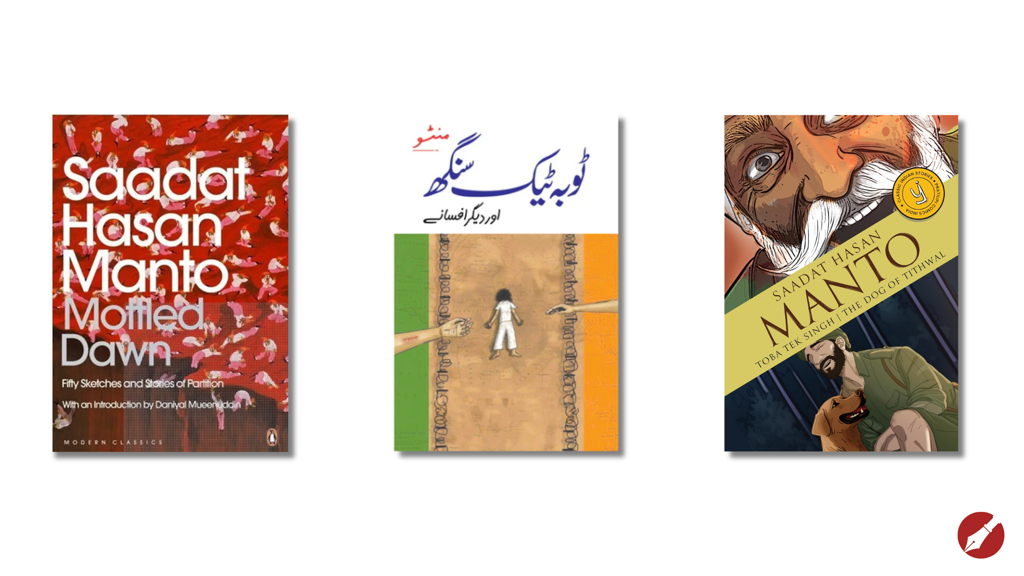
Collecting some of Saadat Hasan Manto’s most iconic stories, including Toba Tek Singh, Thanda Gosht (translated as Colder Than Ice), and Khol Do (The Return), Mottled Dawn is translated into English by Khalid Hasan. Manto, who was charged with offending sentiments all his life, never kept any patriotic consolation; instead, he depicted the senselessness of borders and communal identities, as his victims and perpetrators both existed on both sides of the fence, national and religious.
Using compact scenes and sudden, inhuman endings, he showed the pointless barbarity of the partition. His focus always remains on the human aspect of the tragedy — the humanness and the complete lack of it — beyond the petty plays of religion or nationality. Few partition of India books capture that senselessness as precisely as Manto does in these fifty sketches. For instance, in Toba Tek Singh, the creation of India and Pakistan divided mental patients in an asylum. Bishan Singh, searching but unable to locate his village, dies in an unclaimed borderland.
3. Train to Pakistan by Khushwant Singh
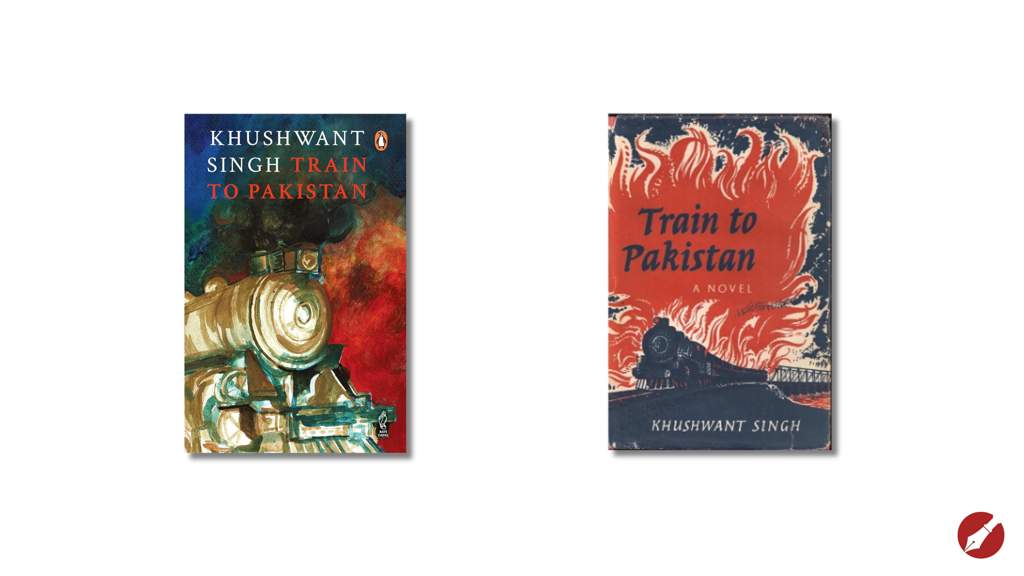
“The fact is, both sides killed. Both shot and stabbed and speared and clubbed. Both tortured. Both raped.” Published less than a decade after the Partition, Khushwant Singh’s Train to Pakistan is set in the fictional border village of Mano Majra, where Sikhs and Muslims live together. Initially remiss of any news about the Partition, when a ghost train arrives from Pakistan carrying dead refugees, the fickle calm of the village breaks apart.
The Muslim villagers are forced to leave on a refugee train, but their troubles might have just begun. Like the best of Partition stories, Train to Pakistan prioritises the local over the national, which is why it remains one of the most enduring partition books in English since its publication. The book was also adapted by Pamela Rooks into a critically acclaimed film of the same title.
4. This Is Not That Dawn by Yashpal
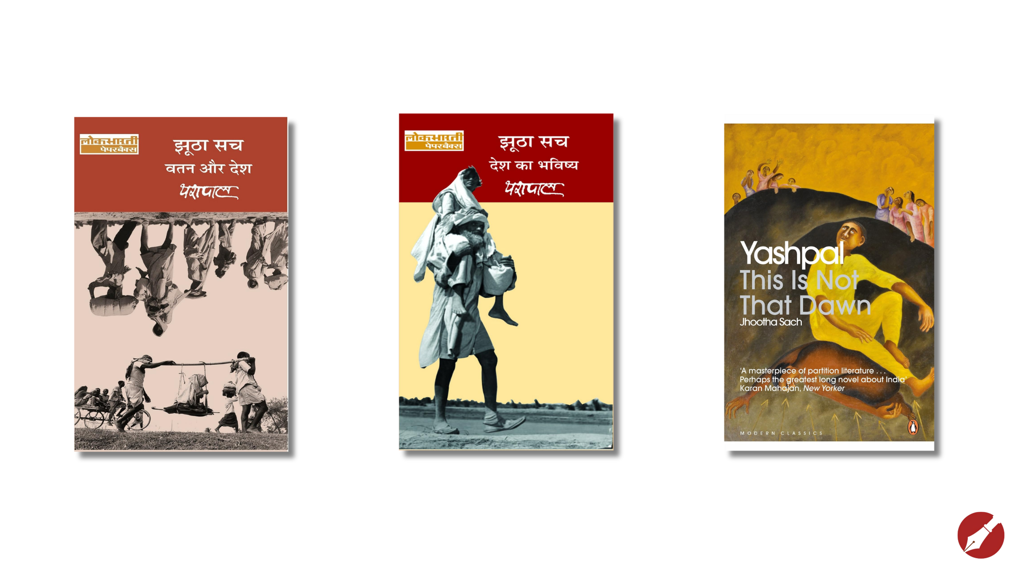
Yashpal’s This Is Not That Dawn (original Hindi title: Jhootha Sach, translated into English by Anand) is one of the greatest Partition novels. Written in two volumes, the novel’s first part is set in pre-1947 Lahore, with its bazaars and rituals, a canopy of different faiths and beliefs coexisting on a multicultural canvas. As Partition’s violence knocks on their door, the British and communal politics of the day create lines between the concepts of “homeland” and “nation.”
We follow a cast of characters (particularly the siblings Jaidev and Tara Puri) whose lives are irreversibly changed by riots and refugee exodus. A balanced panoramic depiction of the tragedy, the book particularly analyses how women — of whichever faith — are always the ones crushed under war and tragedy. In one scene, Tara muses how “a woman is not born inferior to man; she becomes that through social pressure.” It’s through such insights that the title has earned its place among the most important partition literature books ever written in Hindi.
5. Pinjar / The Skeleton by Amrita Pritam
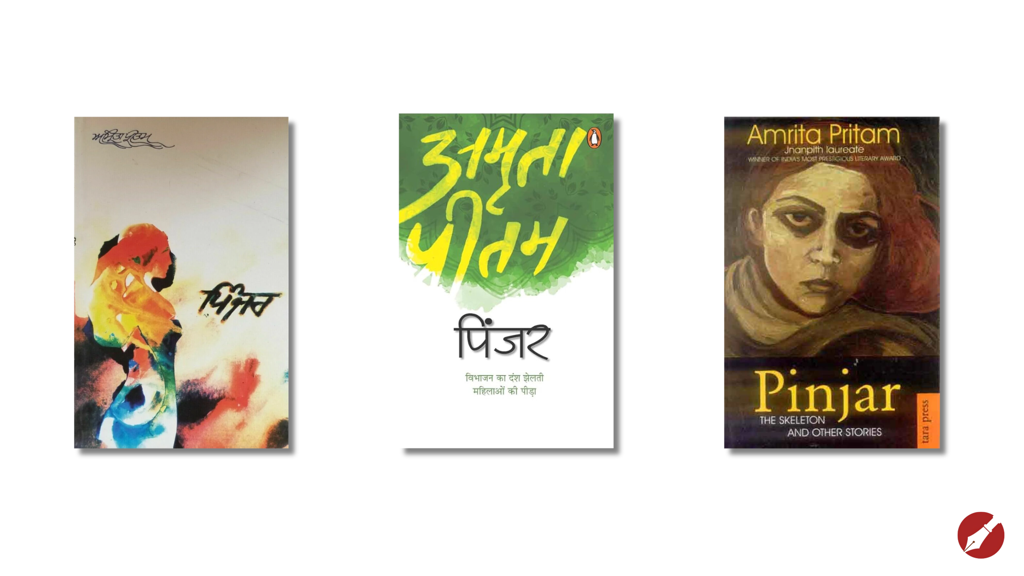
Amrita Pritam’s 1950 novel, translated into English by Khushwant Singh, focuses on Pooro (or Puro), a young Hindu girl whose life is destroyed during Partition when she’s abducted by a Muslim man, Rashid, as a form of ancestral revenge. When she manages to escape his home, her orthodox family refuses to take “a defiled girl” back. The rest of the novel is the story of how she rebuilds her life amidst the skeletons of Partition, empty husks left by the tragedy in ruined homes and ruined trust.
Also adapted into a popular 2003 Bollywood film by Chandraprakash Dwivedi, Pinjar is particularly notable for its sympathetic focus on women. It's a rare instance where partition literature and popular cinema found equal footing in telling the same story. Through the single human tragedy of Pooro, Pritam recreates both the personal and collective trauma that the Partition still evokes.
6. The Other Side of Silence by Urvashi Butalia
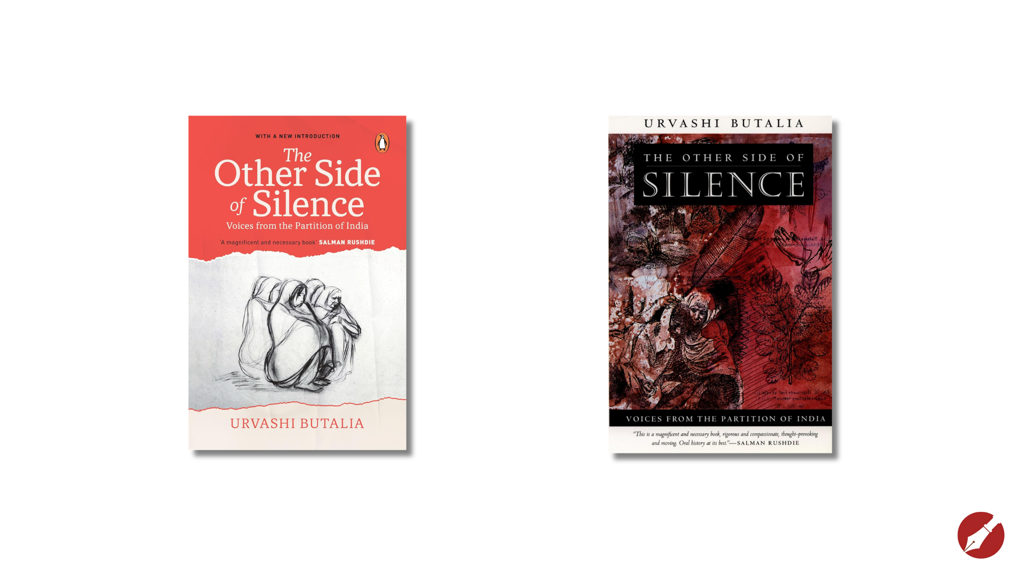
No matter how many statistics or news pieces one reads on Partition, the tragedy of it can only be described in the words of its first-hand witnesses. The Partition only lives (and dies) through oral stories, and only by “placing people – their individual experiences, their private pain – at the center” can one even begin to understand it. That is what Urvashi Butalia’s groundbreaking 1998 book, The Other Side of Silence, does.
Through over a decade of interviews with women, children, marginalised communities, and more, Butalia tries to fill the gaping hole left behind by official histories. The book discusses taboo subjects like family honour and lost loves; through family heirlooms and objects lost or carried across borders, its narratives highlight the mutual compassion and cruelty of the Partition. Few books about partition of India rely solely on lived testimony over narrative invention, which is why The Other Side of Silence is an indispensable part of partition literature.
7. Ice-Candy Man / Cracking India by Bapsi Sidhwa
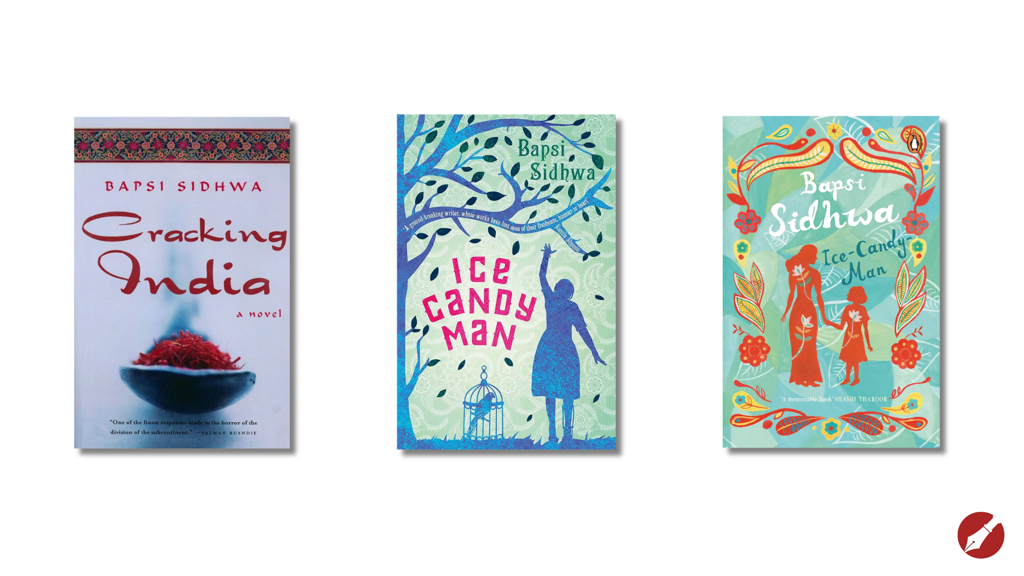
Narrated by a young Parsee girl, Lenny, Bapsi Sidhwa’s Ice-Candy Man (or Cracking India) is a 1988 novel set in Lahore. Lenny’s secular family initially keeps their distance from the communal tensions escalating in the outside world; however, as is often the case, they eventually find themselves embroiled in the conflict. At the heart of the story is the family’s nursemaid, Ayah, who is first attacked by a mob and later kidnapped by a charming man who exploits her.
Grounding it, while simultaneously making it all the more devastating, is Lenny's voice, as she tries to understand the changing world around her. Drawing on her own childhood memories, Sidhwa presents a contrasting world: from festivities on the one hand to the victims of riots on the other. Its global recognition has also introduced many readers outside South Asia to partition novels for the first time. Named as one of the 100 most influential novels by the BBC in 2019, Ice-Candy Man remains one of the most affecting accounts of the partition with its innocent narrative perspective, which is sometimes the best way to understand an extremely complicated world.
8. River of Fire by Qurratulain Hyder
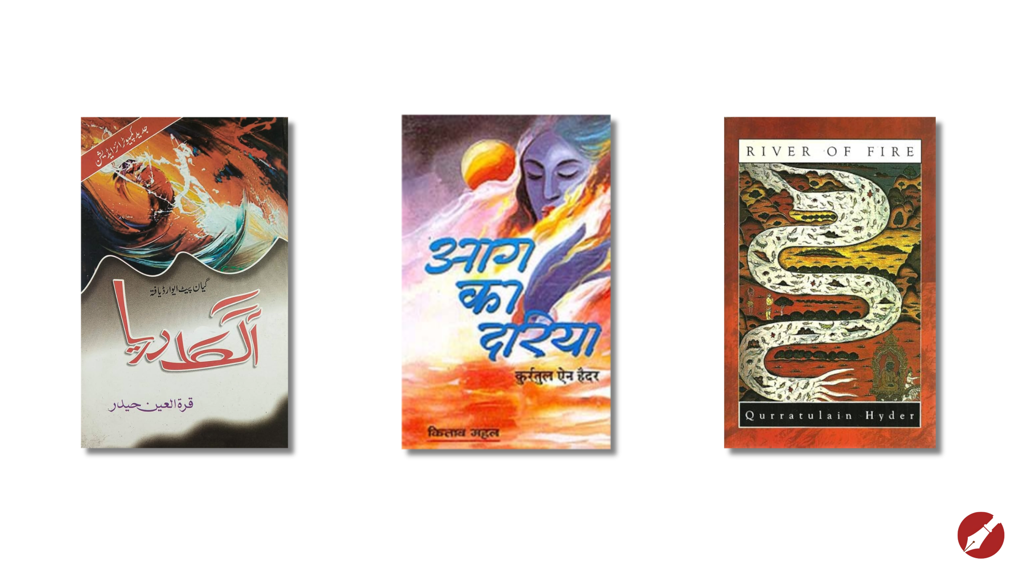
Qurratulain Hyder’s River of Fire (Aag Ka Darya) travels across Indian history over two millennia, from the Mauryan era to the Partition. Grand in its scope, it follows four recurring characters, reborn through successive ages: a Hindu student, Gautam; a Buddhist girl, Champa; a Muslim wanderer, Cyril; and Kamal. In each era, their lives intersect, and through that, Hyder tells the story of a complex land.
In its climactic chapters, Hyder shows the clash of conflicting ideologies, an ancient culture colliding with the nationalist and communalist passions of the day. The 1947 partition and the subsequent migration are the final flows of that fire-themed river. Translated by Hyder herself into English, the book remains one of the most important historical fictions of South Asia. Through magical realism and allegory, Aag ka Darya is the story of a subcontinent persevering through time, despite the divisive flames of nationalism. Few partition of India book choices attempt a canvas this vast, which is why Hyder's novel is a modern classic.
9. Basti by Intizar Husain
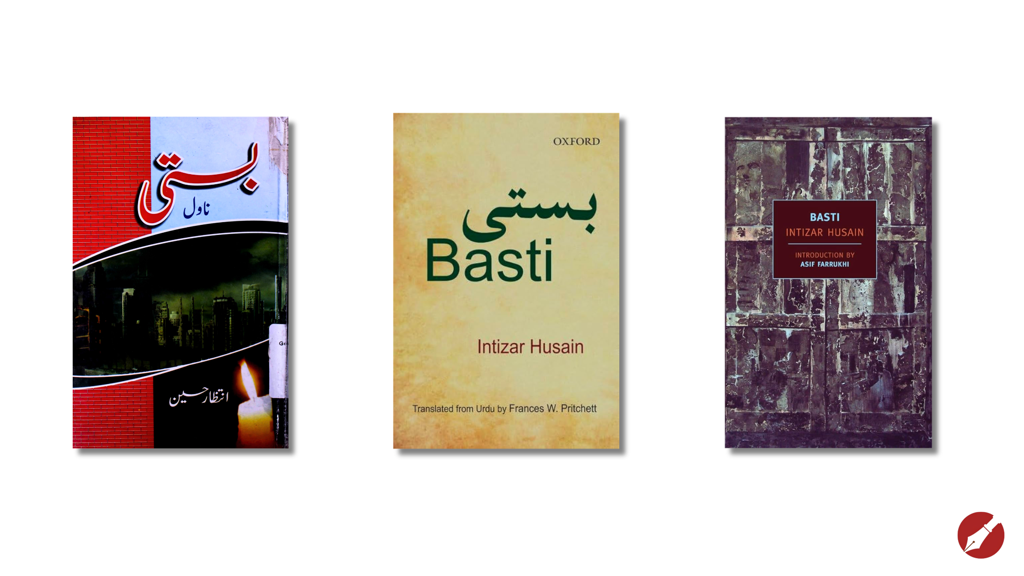
Intizar Hussain’s celebrated Urdu novel, Basti, follows Zakir, a history lecturer at a college in Lahore, who is nostalgic for his childhood village in eastern Uttar Pradesh. Through detailed yet harsh reminiscences, he remembers a time when, in his ancestral village, Hindus and Muslims coexisted peacefully, and how the 1947 partition shattered everything. A merging of oral storytelling with history, the novel brings the past and present together to imagine a lost world.
Unlike much partition literature on this list, Basti explores the aftermath of partition and shows how the trauma persists in different forms. The book takes a sweeping, comprehensive view of history, from World War II to the 1971 creation of Bangladesh, and represents the inner displacements of a subcontinent through one character’s inner exile. The English translation by Asif Farrukhi was later longlisted for the 2013 Man Asian Literary Prize.
10. A Village Divided by Rahi Masoom Raza
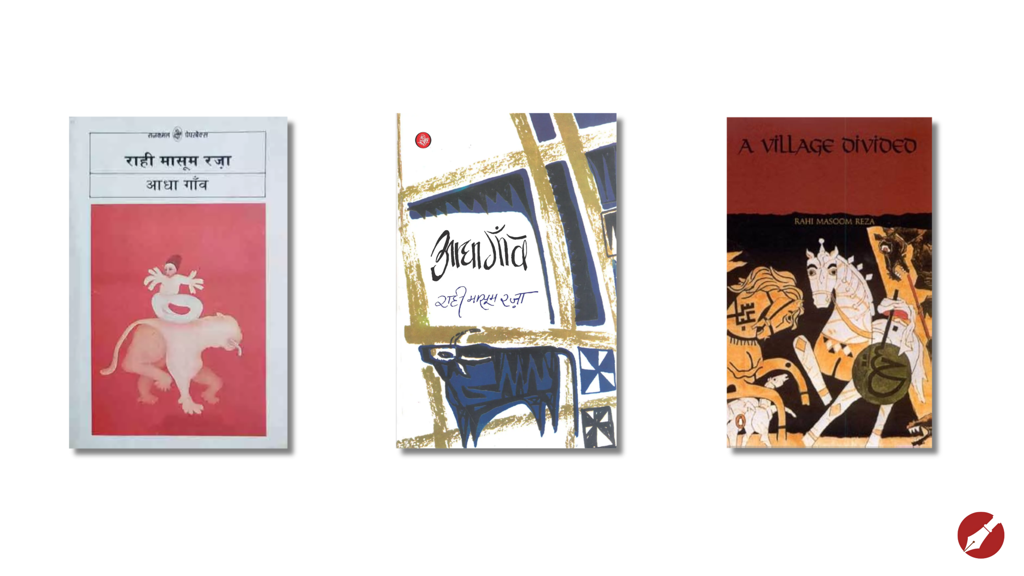
Using local dialects (Bhojpuri-Urdu idioms) and scenes from everyday life (mosque prayers, tea shop gossip) to create intimacy and a sense of a lived world, Rahi Masoom Raza creates a drama set in a fictional Uttar Pradesh village of Gangauli. The novel has four Shia Zameendar families at its centre, along with their surrounding communities, who live under feudal traditions, believing that the world will remain the same forever. As Indian independence approaches, as the Partition approaches, that old belief in eternal homogeneity begins to crack.
The novel portrays partition from a strongly rural perspective, depicting lives changed forever, daily routines broken and never repaired, families split, lives altered. The title Half a Village (Aadha Gaon; the original Urdu title) can be read in two ways: literally, half the village, which was the Muslim side, went to Pakistan; figuratively, the village becomes half its former self because of the loss it undergoes. That double meaning is part of why this remains one of the most devastating partition novels one can read.
11. The Shadow Lines by Amitav Ghosh
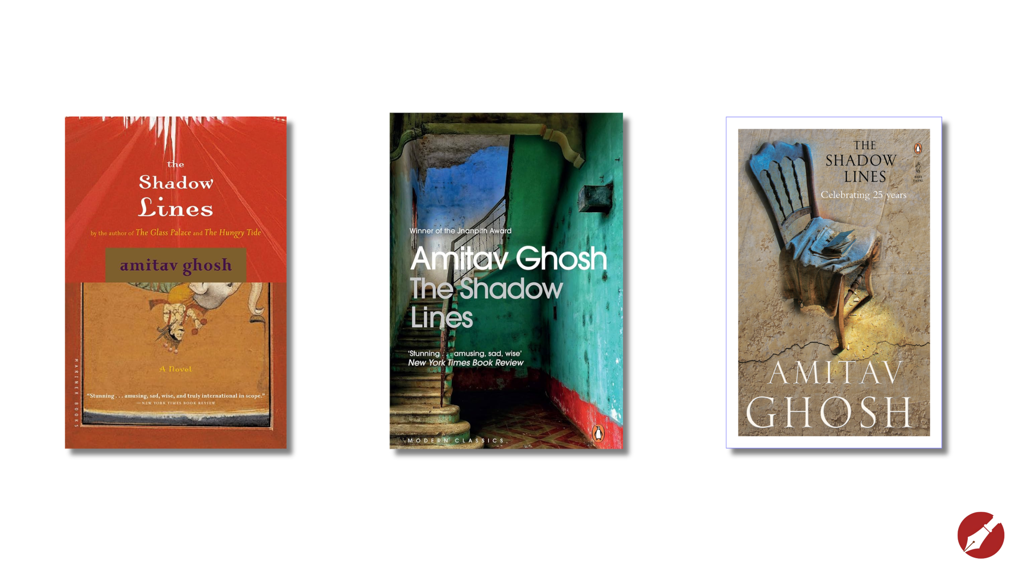
Toward the book's beginning, the narrator's cousin, Tridib, tells him that the actual lines of a map are invisible. It's a theme reiterated throughout the book: "lines that bring people together and hold them apart." Amitav Ghosh's The Shadow Lines is a 1988 modern classic, with an unnamed narrator living in London reconstructing his childhood in India in the 1960s and his family's story across India, Bangladesh, and England.
Spanning cities, countries, and time, The Shadow Lines blur the boundaries we try to create between the personal and the political. The shadow lines of the title refer to how artificial borders like those of India and Pakistan, or the Great Trunk Road, are more figments of memory and imagination than of actual geography. Even if most of the novel is set years after partition, the shadow of 1947 on the characters always looms large. It's a rare example of partition literature that unfurls almost entirely outside the years of Partition itself.
12. Tomb of Sand by Geetanjali Shree
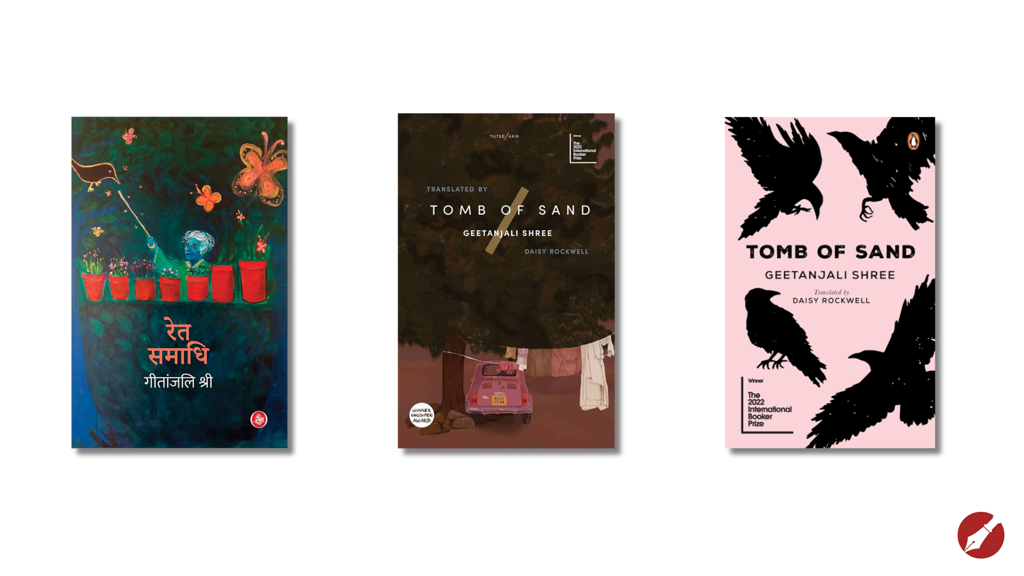
The International Booker Prize-winning novel by Geetanjali Shree, Ret Samadhi (translated as Tomb of Sand), is the story of a spirited 80-year-old Indian woman (Ma) from Uttar Pradesh. After her husband's death, defying convention, she finds herself again and befriends a young transgender neighbour. She decides to travel to Pakistan, a journey into her own past, after being separated from her first love in Lahore in 1947.
Magical realist symbols like shrinking wells and shifting sands recur throughout the narrative, and as the protagonist travels through Punjab, she encounters numerous stories of women and children whose lives were ravaged by partition. Inventive and ingenious in its style, the novel is also an affirmation that life and history can be rewritten anytime, anywhere. Its Booker win also brought international attention to partition novels written originally in Hindi.
13. East-West by Sunil Gangopadhyay
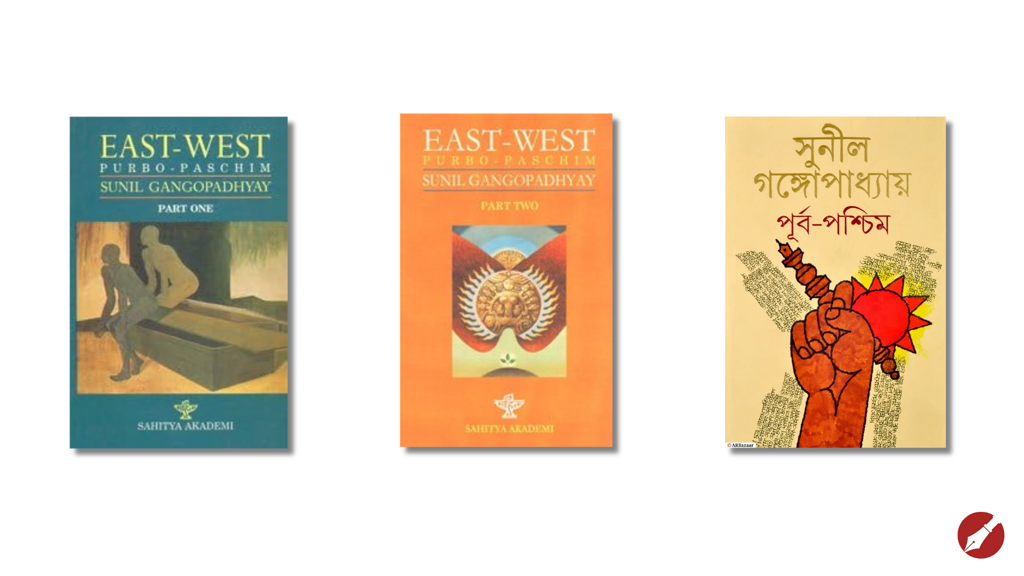
Sunil Gangopadhyay’s Purbo-Paschim (translated into English by Enakshi Chatterjee as East-West), set around the time of the Partition, is the story of two close friends, one Hindu, the other Muslim. As communal riots break out across Bengal, lines are drawn, and allegiances change, these childhood friends are forced apart by the forces of history.
The novel jumps between events in East Bengal and West Bengal or (future) Pakistan and India, respectively. Gangopadhyay explores how the partition divided a shared culture and region, while also dividing the hearts of what used to be one family once. For capturing the emotional ramifications of partition, East-West is regarded as one of the essential partition of India books from Bengali literature.
14. Crossing Over: Partition Literature from India, Pakistan, and Bangladesh by Frank Stewart & Sukrita Paul Kumar (eds.)
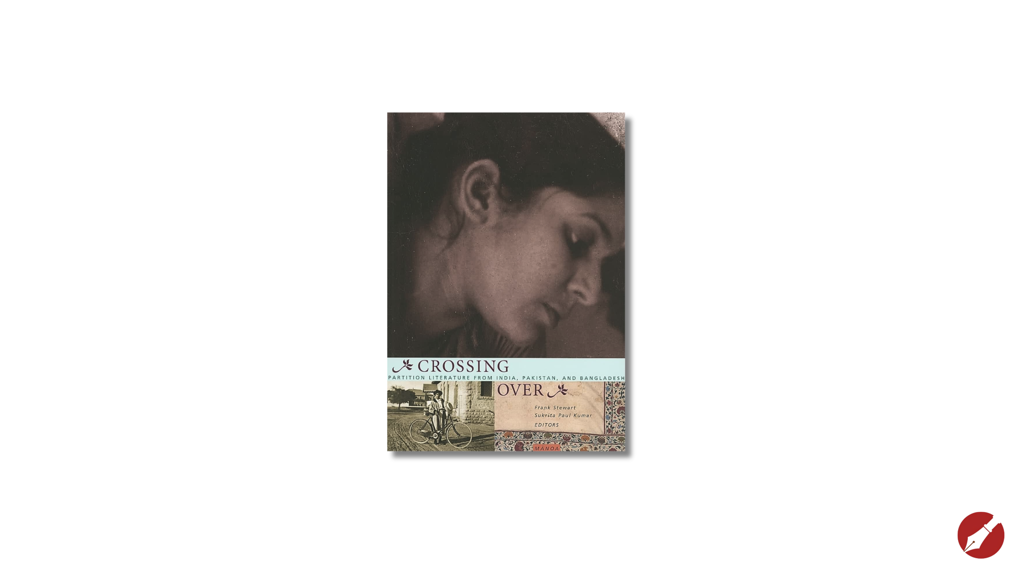
Collecting 18 works of fiction and two essays, Crossing Over is an anthology bringing together writing from India, Pakistan, and Bangladesh, spanning across the 1947 partition of British India to the creation of an independent Bangladesh in 1971. While the scale may be large, the focus throughout is individualist. These are the stories of separated families, abandoned homes, neighbours no longer a part of the nation you belong to, and long, arduous, uncertain journeys. It collects some of the best-known works of partition, like Manto's Toba Tek Singh or Bhisham Sahni's Pali, as well as relatively lesser-known works like Joginder Paul's Sleepwalkers.
Across these varying narratives, while violence is a constant part of the landscape, there is much confusion too, much of irony, belonging, memory, and that stubborn, persistent thing called human survival. The anthology presents the partition as an experience whose consequences still reverberate today across languages, generations, and nations. For someone who wants to start reading more about the partition, this would be the most efficient entry point into partition literature as a whole.
15. A Bend in the Ganges by Manohar Malgonkar
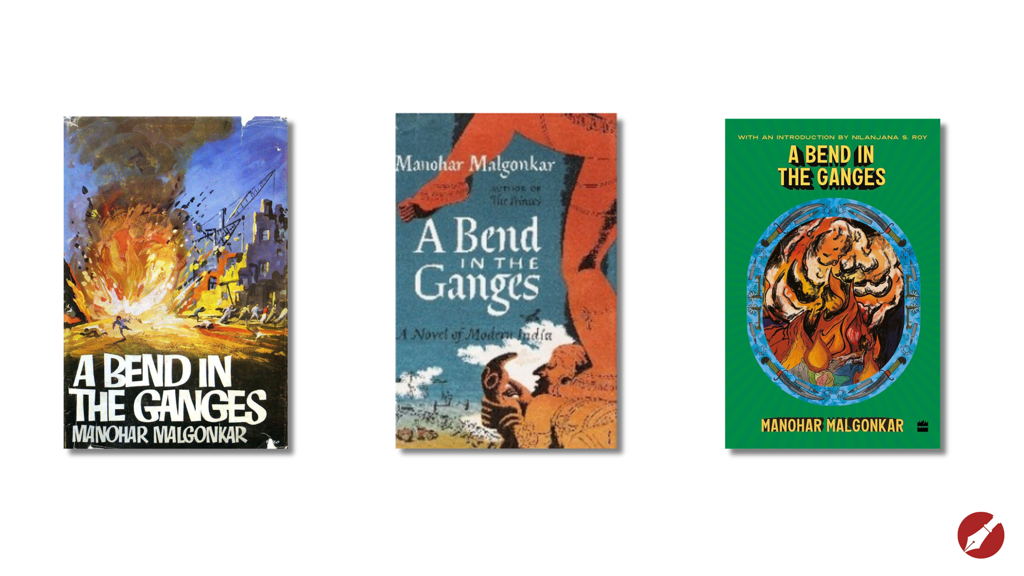
Through the lives of three young men—Gian Talwar (a devout Gandhian) and his friends, Devi Dayal and Shafi Usman (who both join a secular but militant group)—Manohar Malgonkar's A Bend in the Ganges explores the various moral conflicts of a generation fighting for independence, yet not finding it in the form they envisioned. The book starts right amidst Gandhi's civil disobedience campaigns, with World War II going on in the background, and ends on the disastrous Punjab riots of 1947.
The novel uses these various historical events, from the Swadeshi movement to the Rangoon March, as a backdrop to understand the diverging ideals of these friends. While one remains committed to Gandhian non-violence, the others take up arms for independence, with slogans of communal harmony like "Jai Ram, Jai Rahim." As the partition nears, the churning of communal unrest manifests differently for these men. Can freedom ever come without bloodshed? Amidst unrest, do familiar lines remain familiar? Through individual stories, the novel paints the story of the nation they inhabit. Malgonkar's own military background lends this partition novel a level of procedural detail rare in the genre.
16. Azadi by Chaman Nahal
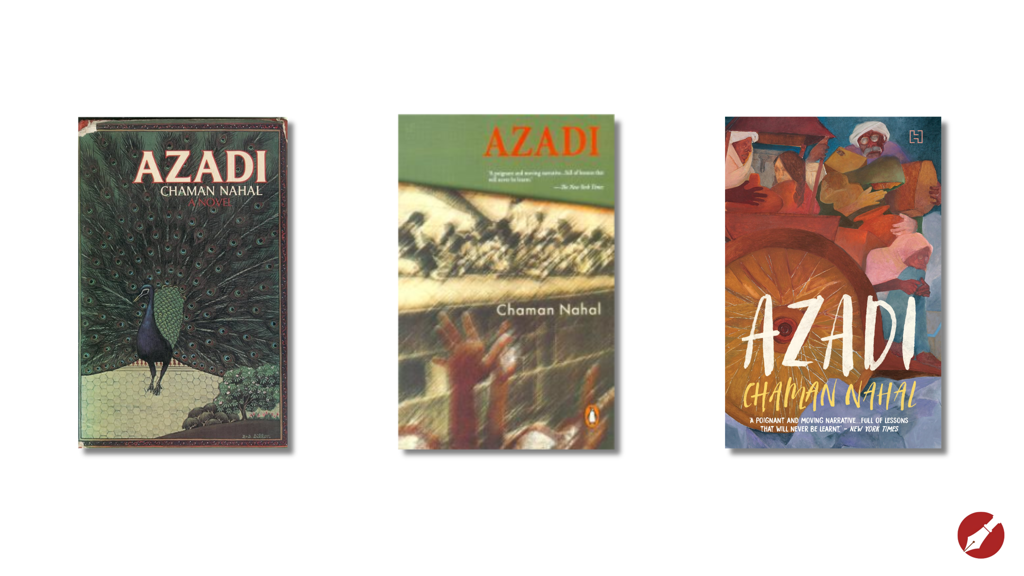
Set in the Punjabi town of Sialkot (now in Pakistan), Chaman Nahal's Azadi is the story of seven Sikh families closely connected to each other as a subcontinent is torn apart. Through Lala Kanshi Ram, a scholar, and his relations, we view a changing world: a world of communal violence, of blockades and riots, and refugees marching across newly created borders.
Through mass murders, train massacres, abandoned villages, looting, and pillaging, the novel depicts the holocaust that the partition left in its wake. Using firsthand reports, Nahal brings realism and the deep psychological costs of the partition. Like the actual event, the Azadi (or independence) of the title carries a sense of strong irony. After all, amid so much death, where is the independence? Is there independence? That irony is precisely why Azadi is among the more unsparing books on partition of India.
17. Sunlight on a Broken Column by Attia Hosain
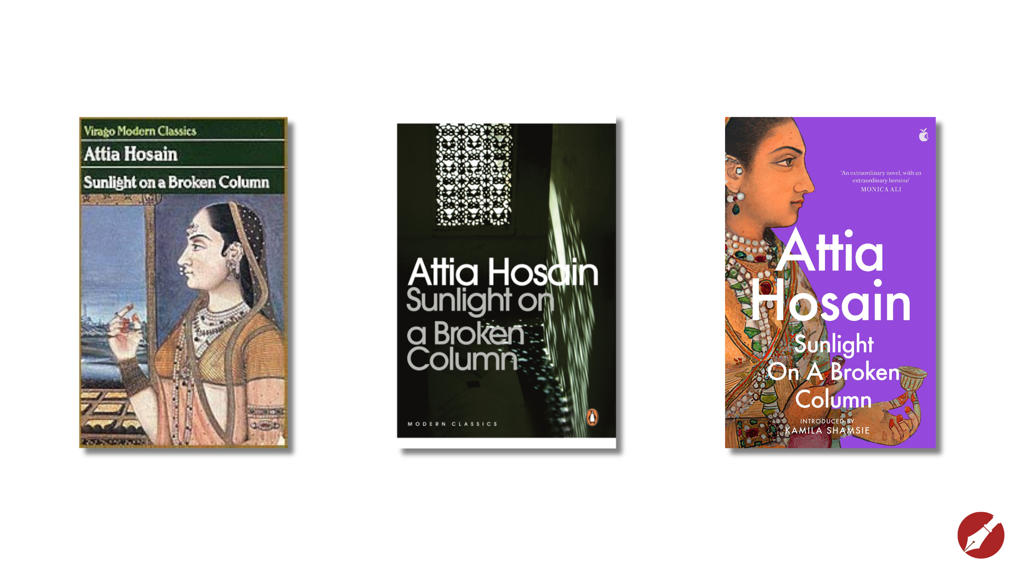
A semi-autobiographical novel set in a wealthy Taluqdar Lucknow family, Attia Hosain's Sunlight on a Broken Column is the story of a 15-year-old orphan, Laila, who is brought up by her liberal aunt. Set across the early 1940s and the independence partition period, it follows Laila as she indulges in anti-British politics while also trying to break the chains of her conservative relatives.
As the violence of the partition eventually reaches her family—with riots breaking out and many of her kin either dying or leaving—Laila must grapple with her own identity and the identity of her nation. Ultimately, Sunlight on a Broken Column is the coming-of-age saga of a girl in a world turned upside down. Simultaneously, it is the coming-of-age story of a nation amidst much ruin, much violence, and much despair. Hosain's own background lends this partition of India book an intimacy that intensifies your reading experience.
18. What the Body Remembers by Shauna Singh Baldwin
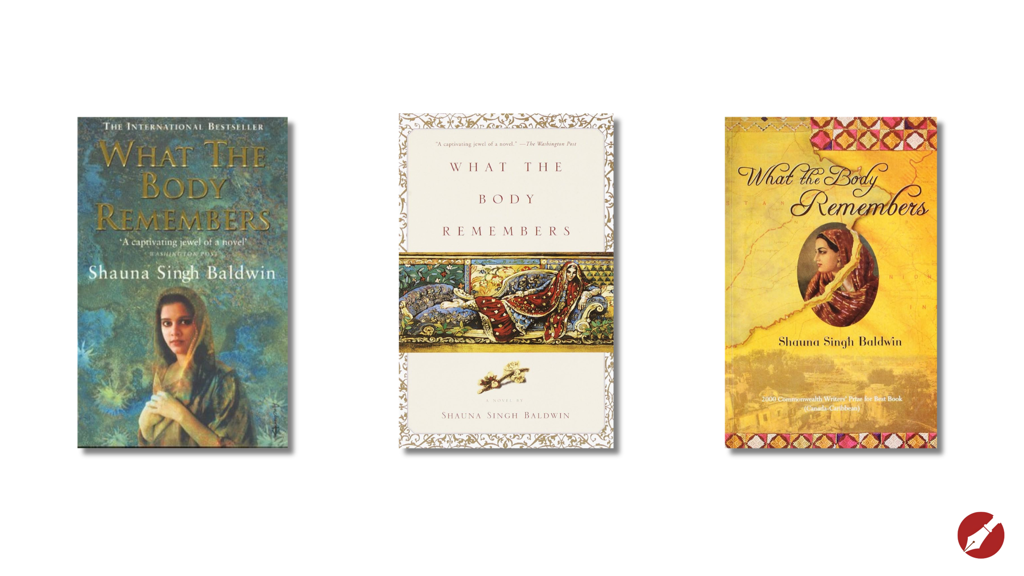
Set in pre- and post-partition Punjab, Shauna Singh Baldwin's What the Body Remembers is the story of two young Sikh women, Roop and Satya, who are married to the same man, Sardarji, an affluent landowner. Through their intertwined lives—with friendship turning into rivalry, eventually mirroring the chaos outside—the novel charts the years leading to 1947 and its aftermath.
The novel unflinchingly depicts how human tragedies often result in the darkest violence against women. Through the tragedies that Satya and Roop go through, the book lends some voice to the silenced trauma of thousands, of lakhs of partitioned women. Ultimately, by depicting the violence, both internal and external, Baldwin questions if the memories that countless women's bodies carry can ever be reconciled. Its unflinching focus on women's bodies and memory sets it apart even among partition literature books centred on female experience.
19. Clear Light of Day by Anita Desai

A novel told in recollections, Anita Desai's Clear Light of Day is a family drama set in Old Delhi pre- and post-partition, revolving around the Das family siblings, especially the sisters Bim and Tara. We see the various stages of their lives unfold amid the conflicted world of the partition. As 1947 nears, these sisters' lives diverge: riots and national events change Delhi and the family forever.
Years later, when the sisters meet, they reminisce over their childhood, the betrayals, the love, and the loss. Even without much explicit politics, the story shows how politics impacts us even in the most personal of ways, and how its impacts linger long after the events have faded. It's proof that the best partition novels don't need overt violence on the page to convey its lasting cost.
20. Stories About the Partition of India edited by Alok Bhalla
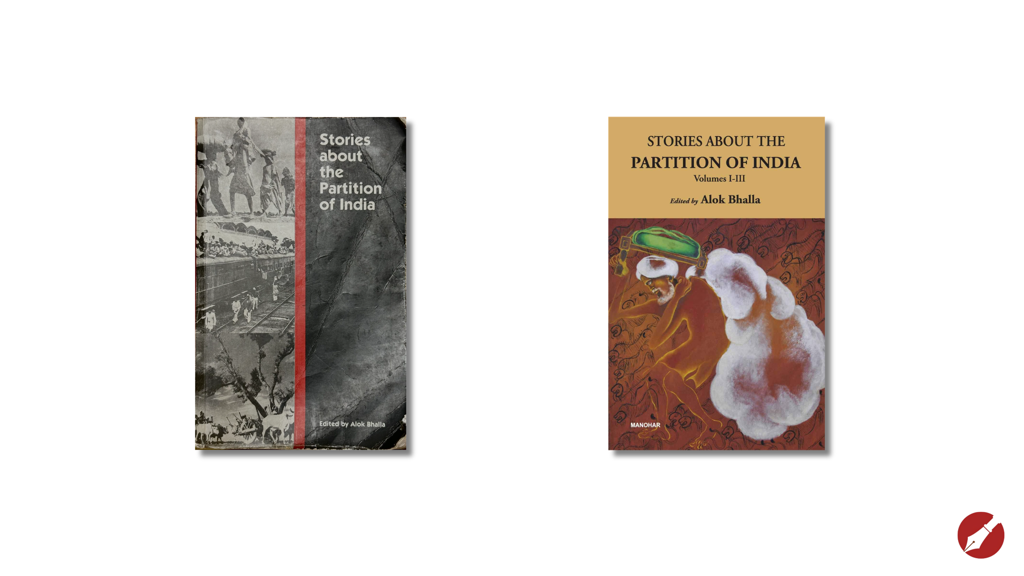
From literary giants to lesser-known writers, from Urdu and Punjabi to Bengali and English, from India to Bangladesh, Stories about the Partition of India by Alok Bhalla is an ambitious anthology of multiple volumes collecting short fiction on 1947. These stories offer diverse perspectives of the tragedy, from train massacres and village exoduses to lingering memories from urban cities. Few books on partition of India can match its scale or its range of linguistic traditions.
By including voices across the plethora, the anthology provides a more comprehensive view of the partition. Even under the fiction umbrella, there are many eyewitness accounts, as well as reportage-style stories. It lets readers glimpse how an Indian Muslim writer would have observed the partition compared to a Pakistani Hindu writer, and so on. Essentially, this book serves as a comprehensive collection of voices to understand the 1947 tragedy.
21. Raavi Paar and Other Stories by Gulzar
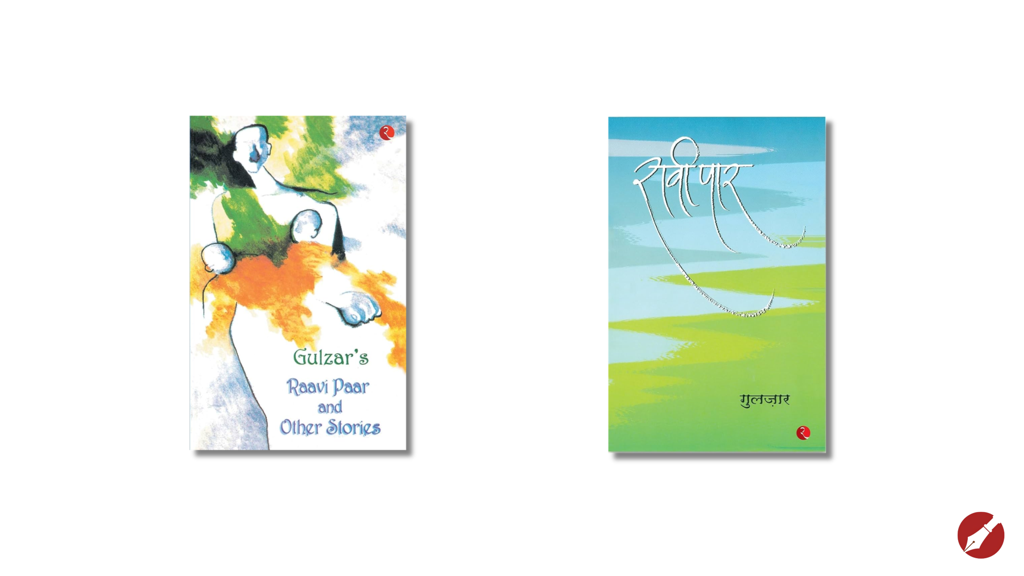
The River Ravi became a part of Pakistan after independence, much like many families and homes that were no longer home for millions of people. That is the titular story of Raavi Paar and Other Stories, in which a poor, sick family claims that the narrator, who is a stand-in for Gulzar, is the son they lost during the 1947 massacres.
These are the themes he explores: loss, nostalgia, and wounds that never heal. Using personal, lyrical storytelling, Gulzar, the famous writer and lyricist, explores the emotional scars of the Partition. The collection of stories carries a rooted, local Punjabi language flavour. Such unbelievable stories examine the many ways in which the Partition continues to shape a region's and its people's memories and lives. Gulzar's own losses during Partition are woven so closely into these stories that the line between partition literature and memoir nearly disappears.
22. Remnants of a Separation by Aanchal Malhotra
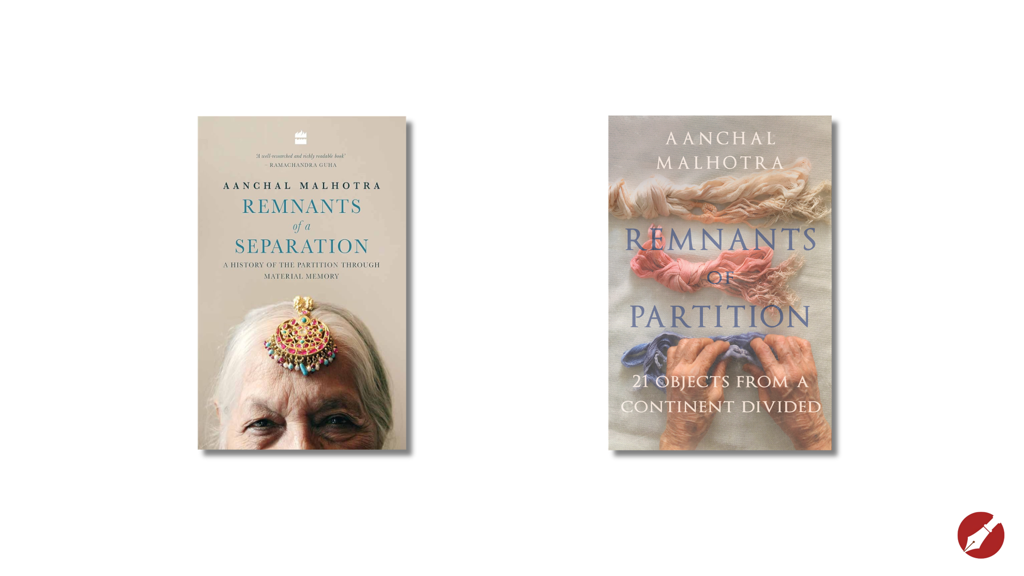
It's a different kind of entry among partition of India books, one built from objects. Centring heirloom objects and other items people carried across the border in 1947, Aanchal Malhotra's Remnants of a Separation is a history of partition through material memory. Interviewing 21 survivors from India, Pakistan, and beyond, she uses artefacts (whether a shawl, a book, utensils, or a pair of scissors) to open a window into the lives of people back in 1947.
For instance, one interviewee describes a cooking knife that was once her last resort for survival, now used for mundane, everyday tasks. In another case, a mother shares her prized shawl with her daughter as they were running away. Through these stories, Malhotra examines how objects can be catalysts for memory, for repressed trauma, and for histories of violence and survival. By focusing on inanimate subjects, she brings to life many animated stories, recreating a time of abject horror and devastation.
23. This Side, That Side: Restorying Partition edited by Vishwajyoti Ghosh
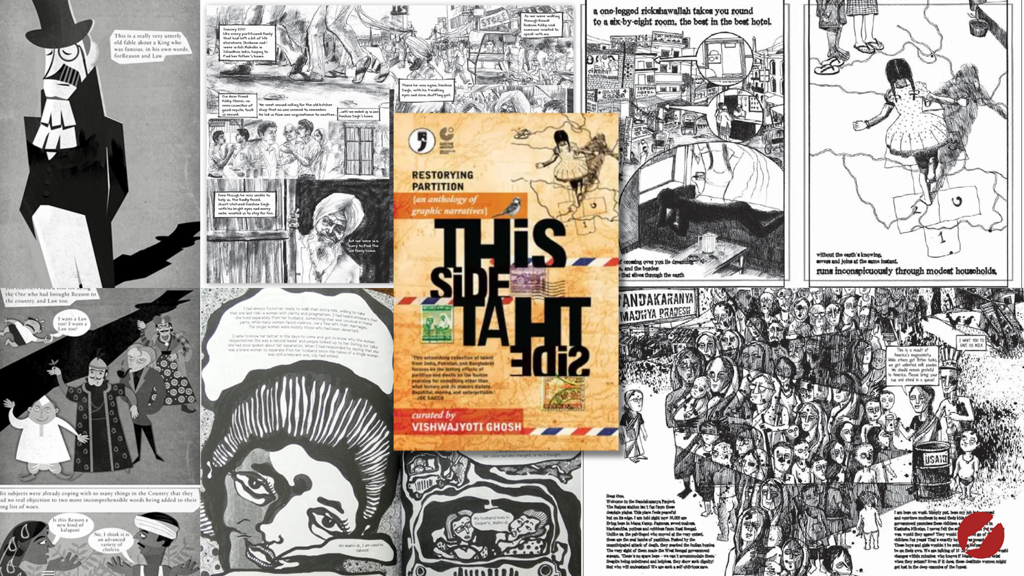
An ingenious partition anthology, Vishwajyoti Ghosh's This Side, That Side collects illustrated stories by 27 artists across India, Pakistan, and Bangladesh. From writers and illustrators to poets and journalists, the contributors bring partition narratives to life visually. As one of the few illustrated partition novels, or graphic narratives, more precisely, it opens the genre to an entirely different form.
What cannot be said through words is depicted using graphics and art forms; what cannot be spoken in words is often left unspoken. Through haunting narratives and images, the anthology captures the lasting impact of a tragedy that continues to define and shape Indian society.
24. Silence Between the Notes: An Anthology of Partition Poetry
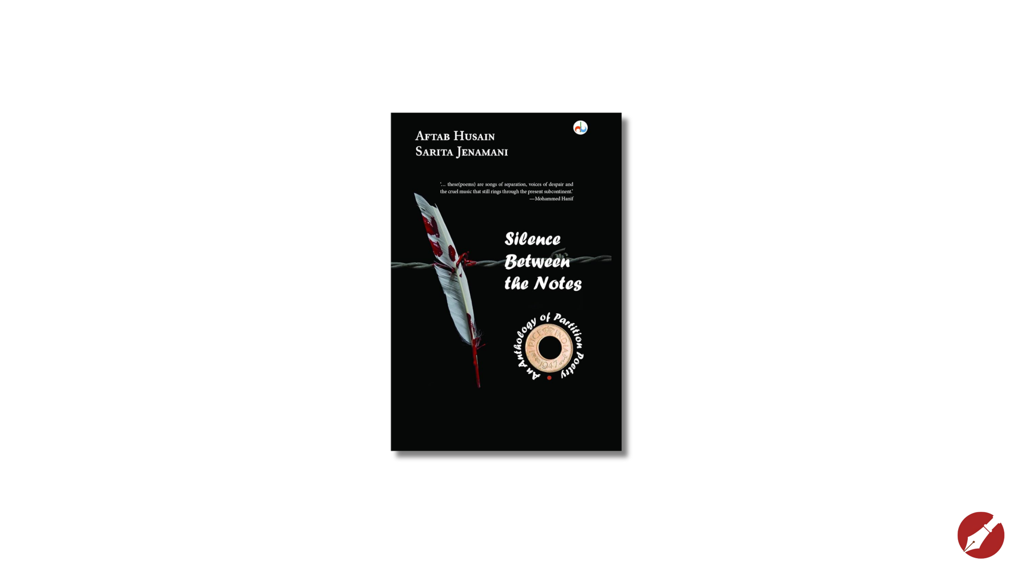
Poetry is often overlooked in discussions of partition literature, which makes this anthology particularly valuable. Silence Between the Notes (edited by Aftab Husain and Sarita Jenamani) collects poems from across languages, including Urdu, Punjabi, Sindhi, Bengali, and Kashmiri. The readers will find Faiz's exile poems on one page, Pritam's laments on another, and pieces by Kashmiri or Sindhi poets on yet another.
As the title alludes to, the book tries to capture the silence between the pages of Indian history, silence often lost in the clamour of violence and mainstream narratives. It is a silence that contains nostalgia, anger, despair, and hope, all at once. Comprehensive in its scope, the anthology brings forward the silence between the notes and ensures they can be heard by everyone.
25. Midnight’s Children by Salman Rushdie
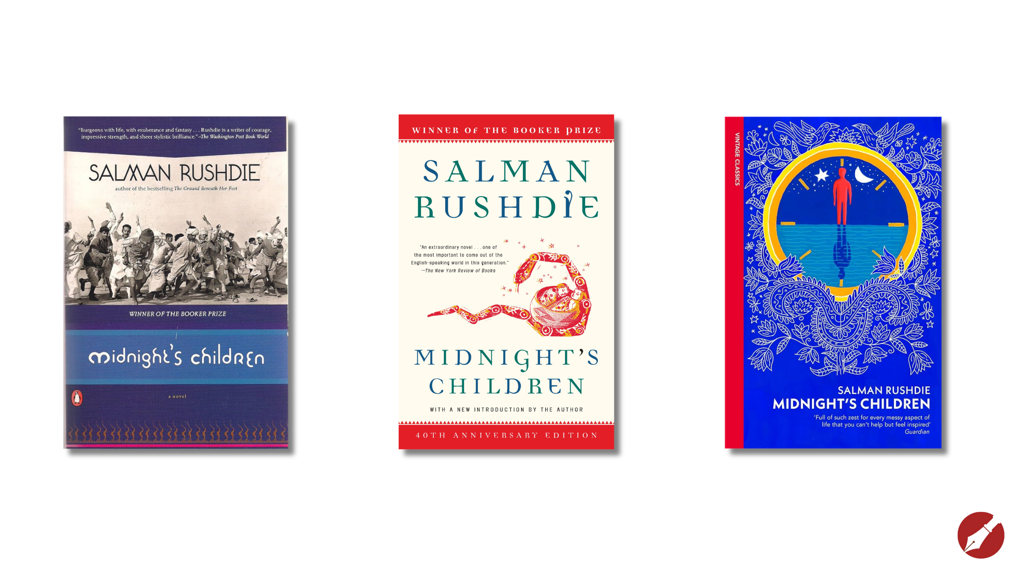
This partition novel remains, decades on, the book most responsible for bringing this history to a global readership. A modern classic by all measures, the winner of the Best of the Booker Award, Salman Rushdie's Midnight's Children is a magical realist novel set against a backdrop of partition and beyond. Saleem Sinai, its narrator, is born right at the moment when India becomes independent, the midnight of 15th August 1947.
With him, thousands of other midnight children, born at the exact same time, obtain strange, mysterious powers. Saleem discovers that he is telepathically linked to these children, who represent India's diverse cultures and futures. Through Saleem's personal life, Rushdie allegorises national events, showing how his family's migrations reflect communal displacements, or how his own fate intertwines with wars, the birth of Bangladesh, or the Emergency. Epic in its scope, blending memory with fantasy, Salman Rushdie presents a nation's history through a family's.
Conclusion
Books on the partition of India remain one of the most accessible gateways into this history, offering diverse perspectives and a personal, intimate experience of a tragic, painful point in time. The reason why partition literature still impacts us all these years later, and still speaks to us, is because it never remains still.
Through testimonies, allegories, short fiction, poems, multi-generational sagas, and graphic narratives, these stories keep getting retold, keeping alive the memory of the pain and the despicable violence of the era. They fill the gaps between the thick lines of history textbooks; a textbook may tell you that three million people died, but it is only through a novel or an oral testimony that you understand the pain of a single mother who has to decide which child gets to cross the border first, and whose safety must be compromised.
Novels about partition draw readers time and time again because the history of the subcontinent is incomplete without these narratives. I hope this list has not just pointed you towards 25 brilliant books, but rather made a case for why partition literature deserves a permanent place on your shelves and reading lists, as some of the most morally serious works of literature to come out of the 20th century.
Because the deeper you go into these books, the more you will find that there is no single story—there are thousands of them, all waiting to be read.