
Democracy's advantages are easy to miss in ordinary times. After all, electoral democracy is a flawed instrument. But flawed instruments, in the right hands, can still cut true. After the Emergency—after press censorship, forced sterilisations, suspension of fundamental rights, silencing of any dissent—Indian voters did something they’d never done before. They threw Congress out. The system weaponised against its own people turned on the perpetrators and held them accountable. The citizenry had kept score. The ballot’s power was reinforced.
It was a somewhat similar context in June 2024. A party and its leader had, over the preceding years, asserted themselves to be beyond scrutiny, above the petty arithmetic of accountability. As that Dickensian line goes, it was the best of times, it was the worst of times. Only, where you fell in that divide depended on where the state decided you belonged. Minorities had been reduced to the language of infestation, while critics to the language of treason.
Elections in India are a festival unto themselves: noise, chaos, community, controversy, all together in a khichdi. The 2024 elections had all of this and more: EVM disputes, talk of a constitutional overhaul, the arrest of opposition leaders, a communal pitch turned up to previously untested frequencies. Its results, though, were the real spectacle. A party that had publicly broadcast a target of 400 seats ended up at its lowest tally since coming to power. It even lost Ayodhya, the very city where the Ram Mandir had just been consecrated, the very symbol around which the BJP's political identity had been built. But how? And why?
This is the question Ashutosh sets out to answer in Reclaiming Bharat: What Changed in 2024 and What Lies Ahead. Ashutosh—former AAP member, columnist, and a familiar presence in the shouting matches that pass for political debate on Indian television—brings an insider's literacy to the question. He works through the many variables of that result: the BJP's internal fault lines, the opposition's improbable coalition, the constitution as a campaign issue, the Mandal 3.0 politics of Akhilesh Yadav's SP, and the slow, self-defeating costs of a decade of arrogance.
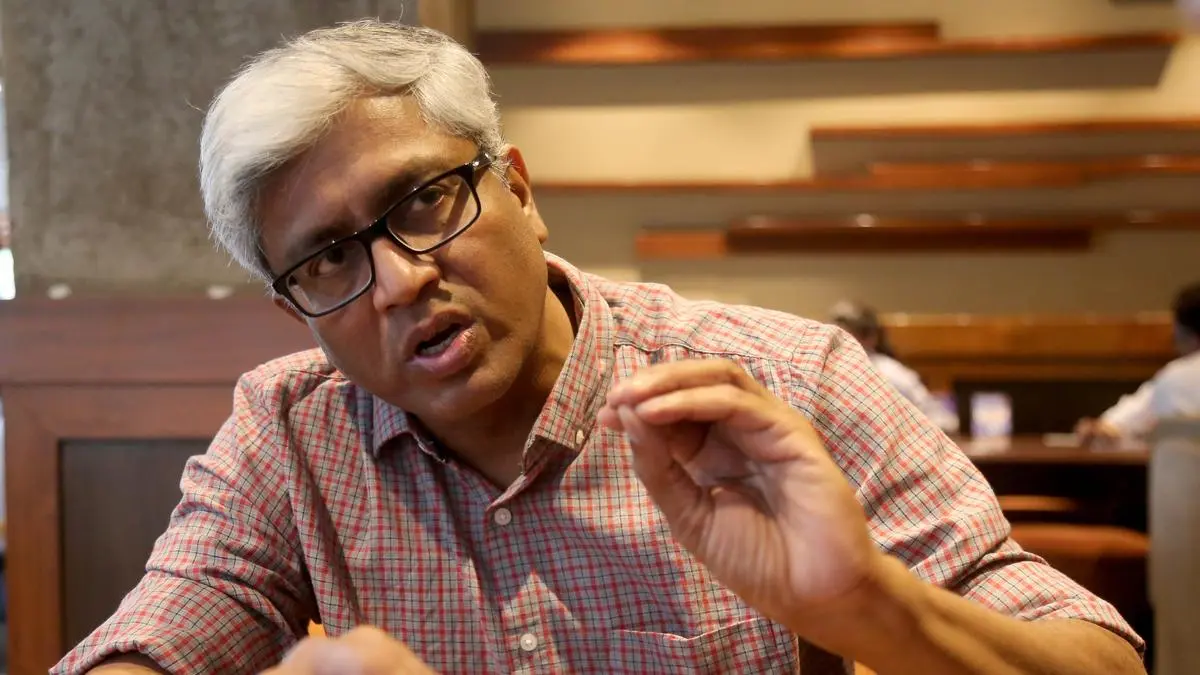
Image credits: Frontline
To understand 2024, you have to return to 2014. Ashutosh describes that first victory as a revolution. He writes, “A revolution is a transformative change, catalysed by an ideology or a thought process with a promise of paradise (of a better and safer future), of relieving the people from the trauma and tribulations of the past, and scourge of the present.” But revolutions make promises. And promises, eventually, require delivery.
A decade on, the delivery had not arrived. Inflation was skyrocketing, unemployment soaring, wages stagnant, household debt climbing. Amidst this, caste and communal tensions were being deliberately stoked through the dream of a Hindu Rashtra, a new constitution. As Ashutosh explains: “Unlike Congress and the old socialist parties, BJP is an ideological party with a clear plan for the future, and its concept of the nation and of Indian society is diametrically opposite to the vision of Mahatma Gandhi and Jawaharlal Nehru. Their idea is to radically redesign Indian civilisation; it is to re-engineer the Indian nation; to change the basic contours of Indian polity, and create a new subconsciousness, which they proudly call ‘Hindu consciousness.’”
Ideology at this scale doesn't merely change governments; it changes people. “[W]hen nostalgia is faced with the present reality, it gives birth to vengeance. The incompatibility of the nostalgia and the present reality creates a disconnect between the emotional and cognitive world, which leads to irritation, frustration, restlessness, disintegration, destruction, and ultimately, violence. This disconnect creates a void in the emotional world, and revenge is the only refuge to fill that void,” Ashutosh notes.
Simultaneously, the Prime Minister was engaged in a separate project, that of constructing his own mythology. “If in Gujarat he transformed himself from being a party bureaucrat to a powerful political leader, in Delhi he evolved into a demigod who makes no mistakes and is accountable to none. Modi became exceptional, extraordinary and incomparable, beyond the reproach of his contemporaries, and over the years his image-makers have tried to sculpt him with a touch of divinity.”
All of this—the undelivered promises, the cult of infallibility—had alienated a large section of voters the BJP had taken for granted. The party, the author pinpoints, “failed to realise that for the majority of Hindus, the fight for social justice is a fight for their existence; it is a fight for their social identity; it is a fight for dignity, a dignity that has been denied to them for thousands of years.”
It was, at its core, an irresolvable tension. “[BJP/RSS} is faced with the dilemma that if it takes the social justice route, then its Hindu unity project is jeopardised, and if it continues with an aggressive Hindutva path, then its electoral victory will be hampered.”
The book's final note is, unexpectedly, hope. The citizenry had kept score. The flawed instrument, in the right hands, had cut true again. “Democracy is the name of contesting ideas, searching for new concepts, and questioning the present one. To imagine that questioning discredits and destabilises the system and institutions is an unsettling idea.” The 2024 elections showed that democracy, no matter how fickle it may seem at times, is still alive, still questioning.
Still imagining.