
History is written by victors, and even among victors, it’s largely written by and for men. Women, at best, exist in footnotes, in the corners of paintings, in old dusty journals kept beneath the “important” texts, in the periphery always, never the centre. To quote philosopher Simone de Beauvoir, "women's entire history has been written by men." That is exacerbated even further in a state like Punjab, with its masculine identity and male-centric narratives.
All this is why Harleen Singh’s The Lost Heer is such a key book to understand Punjab, its history, and its present. Through stories of several iconic women in colonial Punjab, the book challenges the mainstream narratives that surround Punjab, while bringing to the forefront stories that should matter, stories largely untold henceforth. I enjoyed chatting with him at the Jaipur Literature Festival 2026, where we talked about his book, his Instagram journey, his own process of learning and unlearning, and the positive shift in history writing in Punjab. Edited excerpts:
Amritesh Mukherjee: Is this your first JLF?
Harleen Singh: As a participant? Yes. I've been here before as an attendee.
AM: How has the experience been this year? How is it different from being an attendee?
HS: I think it's surreal. The fact that people are coming here for your work means a lot and tells you the impact you're having. It's been great.
AM: Let's start with the book. Punjab was sort of hailed by the British as the sword arm of India, and you also write about how masculinity became a pillar of colonial Punjabi identity. As a researcher and historian, what are some of the ways that you've seen it manifest in the way history is written or studied?
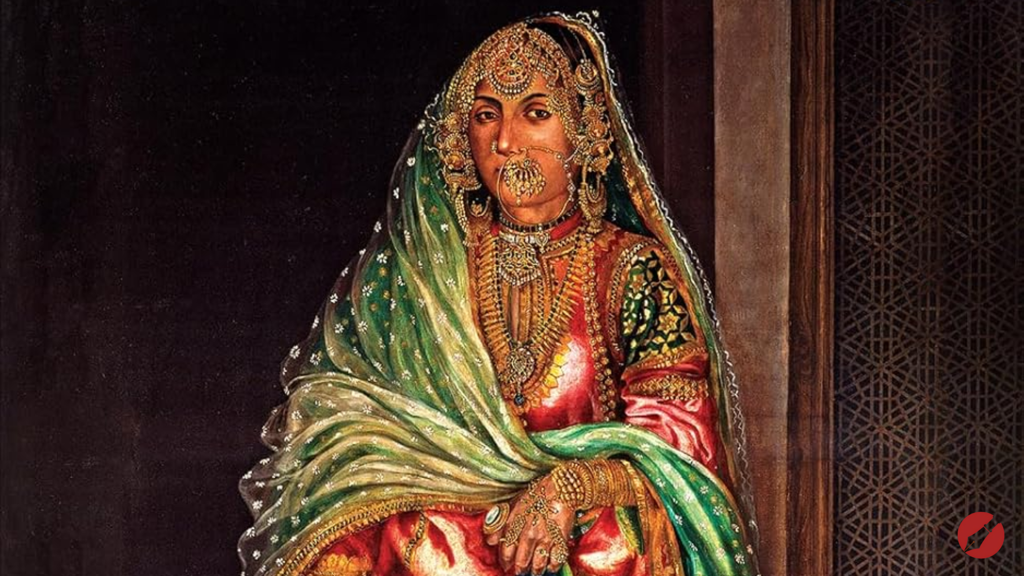
HS: Punjab's history is very masculine. Even the female characters that appear in Punjab's history are portrayed as very masculine. You had women donning masculine attire: they have a sword in their hands, on horseback, fighting. But the femininity of women is kind of ignored, even though that's the reality of most of Punjab. 50 million Punjabis were women, and not all of them are martial. Punjab's history has been written in a way that neglects that aspect, and I wanted to challenge that in my book. I wanted to understand and explore the voices that are otherwise absent from Punjab's official histories.
AM: Has that created any challenges in the sense that you are writing and working from a particular perspective of making sure women are represented rightly?
HS: Yes. I did unlearn a lot of things; it took me 10 years to write this book. There was a series of unlearnings I had to do, and I also had to acknowledge that I'm not here to take agency away from the women. I'm here as an archivist trying to get those voices, in a technical way, trying to translate them or locate them in a way that people can understand, but I'm not here to give voices to women. It's not my job to give them a voice. My job is to just find those voices and make them intelligible for the modern reader.
AM: Is that an extension of how there remained rather lazy assumptions about women back then? Was that a journey you had to make as well?
HS: Yes. A lot of romanticized visions of Punjab: the idea that women were either very meek or very martial. Nothing existed between those two stereotypes. I thought women existed in a variety of avatars, and I was quite surprised to find women doing all sorts of things, things on par with the modern women as we recognize them today. So yes, a lot of unlearning and a whole phase of discovery about women that I never expected to exist.
AM: Has Instagram influenced this journey?
HS: Absolutely. My journey actually began on Instagram. I never wanted to become an author. I was just archiving information. I'm a collector; I've been collecting clippings since I was 17. I liked to display what I had: mostly historical photos, postcards, ephemera, letters, and other items. In the middle of that, I realized I needed a particular theme, and that women's history is quite important. You don't find much on the history of Punjab women. Eventually, COVID hit, and the Instagram project morphed into a book because I was told it needed to be one. I was like, okay, let's do it.
AM: In the introduction of your book, you've written how you wondered whether looking at these women merely as partition victims and survivors was erroneous. Do you think many narratives that deal with historical women figures tend to slide towards a certain sense of victimhood, even if not outwardly implicit?
HS: Yes, because Punjab's women's history sadly was all about women as victims of Partition, women as victims of the 1984 riots, women as victims of the Jallianwala Bagh massacre. I believe it was unfair to view a community's history through a single event. It was a tragic event, but it's not fair to see the history of a community through one traumatic event. That's when I thought it was important for me to remove myself from that lens and start seeing the history of Punjab through a different lens. Yes, the partition was a traumatic event, but that was just a part of their lives. They had a much longer, much more eventful life, and it's important to understand that part because it is usually not talked about much in our popular history.
AM: At a time when revisionist history-making and appropriation are at their loudest, what gives you hope? How do you see the way ahead to reconcile the nuances of a non-partisan past?
HS: Revisionist history has been around since time immemorial, and it will continue to be written. I don't really care about that. As historians, it's our job to do our due diligence, conduct proper research, and properly reference our sources. And if you see my references in my book, it's almost 100 pages long. People will continue to write revisionist history, but truth will always prevail, and I'm hopeful.
AM: When you are writing, and given your public-facing role, especially because of Instagram and how popular your work has been, is there a sense of resistance arising from the popular perception, not just of Punjabi women but of Punjab altogether? Like how the right wing today will see Sikhs as the martial side of Hinduism. Do you feel that, and/or is that something you keep consciously in mind when you're writing?
HS: Not really. I've never had such an experience. I've been on tour for almost 8 to 9 months, and I've been lucky: my book has been received well in Punjab. I was skeptical about that, but I think it's also because we don't really have a lot of popular history on Punjab coming out of Punjab. It was one of the first books to really address many of these new names, because many of these women were, in our public memory, non-existent. From all political spheres, the right and left, they have all appreciated my book equally. The RSS has loved my book, and so has the CPI. I've been very lucky about that.
It's also because my book doesn't really express any of my opinions. It's just me stating what I found in the archives and putting it in context. So maybe, when I write a more politically charged book in the future, I might face some pushback. But for now, I've been doing well.
AM: What needs to change in the way Punjabi history is read and studied in the mainstream Indian discourse?
HS: We need to, number one, start to see Punjab not as a monolith. We sadly see Punjab as a very Sikh state—Sikhs are an important part of the province—but the state was at the crossroads of civilization for thousands of years. They've had Greeks, Romans, Persians, and then all kinds of people moved to Punjab. Until 1947, Punjab had a sizable Bengali population who were assimilated and spoke Punjabi.
There were a lot of new people living in Punjab. It was a very, very multicultural region. But sadly, since 1947, Punjabi history has become very Sikh-centric, and it has its political reasons, of course. We need to get away from that.
Whatever we wanted to achieve in the '70s, we have achieved that. Today, I think it would be sincere if we started to look at Punjab through a different lens; see it as a multicultural province, which it is, and start to uncover these lost histories, because you can find so many different aspects of Punjab. I'm actually glad that people have started to look into Punjab much more now, because in the last three to four years I've seen very interesting books on Punjab's history, which I don't think was possible a decade ago.
AM: Would you recommend some of them?
HS: Yes. There's one book on the fashion of Punjab titled Influences of the British Raj on the Attire and Textiles of Punjab. It talks about how Punjab changed during the colonial period. It was published by Rupa Publications by Jasvinder Kaur. It's a very mundane title, but it's a very good book. Things are changing slowly. After this book, I have had people come up to me and say they've been writing about the history of cookbooks in Punjab, which is fascinating, or the history of schools in Punjab. We need these social histories.
AM: Last question. What are you reading right now, and is there another book you’re working on?
HS: I am currently reading Sam Dalrymple's Shattered Lands, and I am working on another book, also about Punjab, but it's a city history. It's the history of the twin cities of Ambala in the British Raj.
AM: I’ll look forward to it!