
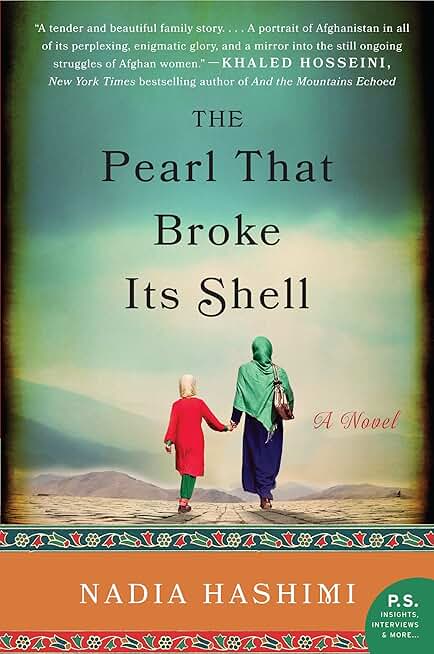
The Pearl that Broke Its Shell
Set across two distinct periods of Afghan history, this novel weaves together the parallel lives of Rahima and Shekiba, two women separated by a hundred years but bound by a shared cultural practice. Rahima grows up in Kabul in 2009, one of five daughters in a household quietly falling apart. Her father's addiction leaves her mother stretched thin, and the girls face a childhood of restricted movement and interrupted schooling. Then her aunt, Khala Shaima, offers an unexpected way out: Rahima will live as a bacha posh, dressed and treated as a boy until she reaches marriageable age. It's an old tradition, quietly tolerated when girls are young, and it opens doors that had been firmly closed to her. Khala Shaima also begins sharing a family story, and it's this story that gives the novel its second, equally compelling thread. Back in 1909, Shekiba is a young woman scarred in a childhood accident, left without family after cholera takes everyone she loves. Passed between relatives and treated little better than a servant, she eventually escapes by assuming a male identity. Fortune, rare and fragile, leads her to the palace in Kabul, where she serves as a guard to the king's harem and, in time, manages to build something resembling a life of her own. Hashimi tells both stories with quiet intensity, and the connection between these two women gives the novel real emotional weight. It's a absorbing read, rooted in a tradition few Western readers will know much about.
- Author: Nadia Hashimi
- Publisher: William Morrow
- Genre: Historical Fiction
- ISBN: 978-0062244765
- Pages: 480 pages