
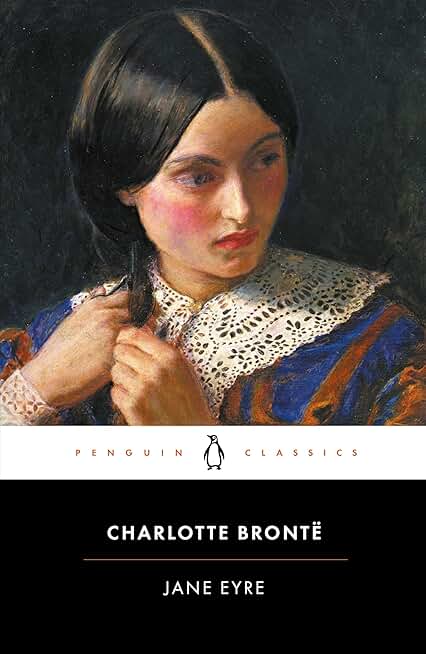
Jane Eyre
Charlotte Brontë's Jane Eyre arrives with a weighty endorsement from William Makepeace Thackeray, who called it 'the masterwork of a great genius', and it's difficult to argue with him. This is a novel that crackles with psychological intensity, atmospheric unease, and a kind of moral sharpness that still feels startling. When it was first published, readers were both dazzled and unsettled by its raw portrayal of a woman insisting, quietly but absolutely, on her own worth. Jane is not a passive figure waiting to be rescued. She endures a loveless childhood under a callous aunt, then survives the bleak austerity of Lowood School, and you feel every hardship as a thing that shapes rather than breaks her. Her inner life is vivid, complex, and completely convincing. Taking up a governess post at Thornfield Hall gives the story room to breathe, and the arrival of Rochester, sardonic and oddly compelling, shifts the novel into something richer and more dangerous. The romance between them is tense rather than tender, full of push and pull. Then a hidden secret ruptures everything, and Jane is faced with a choice that cuts right to the bone of who she is. This Penguin edition includes an introduction and notes by Stevie Davies, which offer helpful context without overwhelming the text. A novel about freedom, dignity, and the cost of both.
- Author: Charlotte Brontë
- Publisher: Penguin
- Genre: Classic Literature
- ISBN: 978-0141441146
- Pages: 624 pages