
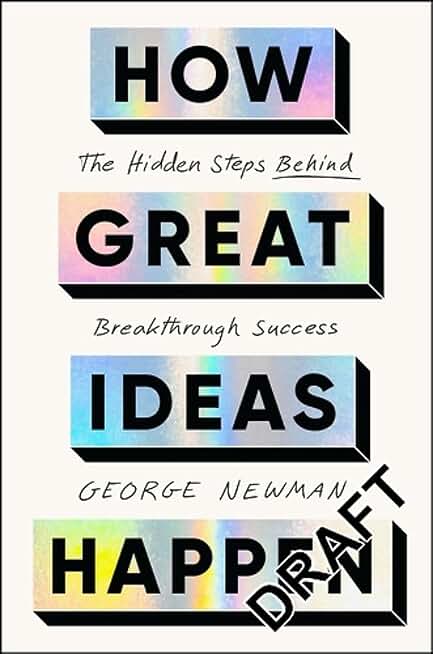
How Great Ideas Happen: The Hidden Steps Behind Breakthrough Success
We tend to picture creativity as a bolt from the blue, something that strikes the chosen few in a moment of mysterious inspiration. George Newman, a cognitive scientist, has a rather different take. Ideas, he argues, aren't conjured out of nothing. They're discovered, much like buried artefacts waiting for someone patient and sharp-eyed enough to find them. It's a reframing that feels both surprising and, once you've heard it, completely obvious. Newman draws on research from psychology and cognitive science to make his case, but this is no dry academic text. His central metaphor, that of the creative person as archaeologist rather than visionary, gives the whole book a pleasing coherence. The best innovators don't sit around hoping for a lightbulb moment. They scan, they dig, they sift. Then, with a bit of luck and a lot of intention, they strike something valuable. The examples Newman uses are what really bring this to life. Jackson Pollock's drip paintings, it turns out, echo deep structural patterns found in nature. Korean cinema developed its distinctive voice by studying foreign films with forensic attention. Paul Simon built Graceland by combing through existing recordings for what he could strip away and reshape. Each case study adds another layer to a genuinely compelling argument. What makes this book worth your time is its quiet practicality. Creativity, Newman insists, is a repeatable process, one that's available to anybody willing to treat it as a discipline rather than a gift.
- Author: George Newman
- Publisher: John Murray Business
- Genre: Entrepreneurship
- ISBN: 978-1399834551
- Pages: 304 pages