
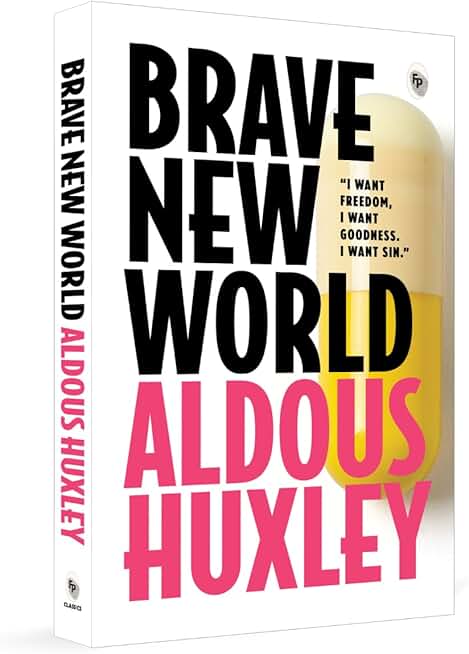
Brave New World
Aldous Huxley's Brave New World imagines a future that's less nightmare and more velvet cage. Humans are laboratory-grown, psychologically conditioned from their earliest moments, and kept perpetually content through engineered pleasure. It sounds almost appealing, which is precisely the point. The horror here isn't brutality. It's cosiness. Huxley's society has simply traded truth, feeling, and selfhood for frictionless stability, and nobody seems to mind. That quiet surrender is what makes it so unsettling. Through biting satire and a richly constructed world, the novel interrogates consumerism, political manipulation, the creep of technology into human identity, and what it actually means to be a person rather than a product. The writing balances wit with weight, and Huxley's ideas land with a sharpness that lingers well after the final page. It's the kind of book that makes you glance at your own habits a little differently. Particularly well-suited to readers who enjoy fiction that carries a philosophical edge, it also works brilliantly in book clubs or classroom settings, where its central tensions (freedom versus comfort, individuality versus conformity) spark the sort of arguments that don't resolve easily. Nearly a century on from its publication, Brave New World remains a pointed, thought-provoking read. Not because it predicted the future accurately, but because it understood something enduring about human nature: given the choice between happiness and freedom, we might not always choose as wisely as we'd like to think.
- Author: Aldous Huxley
- Publisher: Fingerprint! Publishing
- Genre: Science Fiction
- ISBN: 978-9370898028
- Pages: 256 pages