
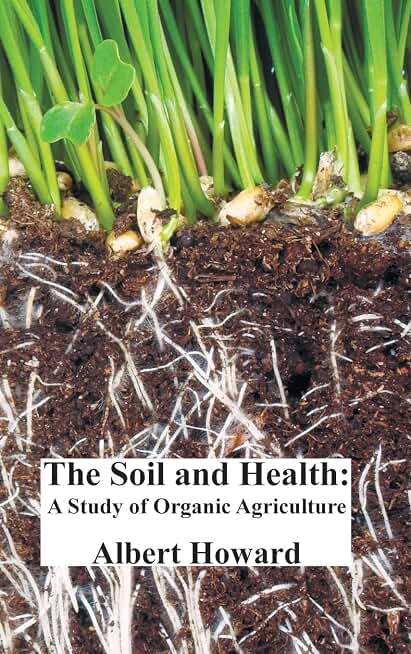
The Soil and Health: A Study of Organic Agriculture
There are books that inform, and then there are books that quietly reframe the way you see the world. Albert Howard's classic study of organic agriculture belongs firmly in the second category. It's a work that feels, even now, startlingly relevant. At the turn of the twentieth century, chemical fertilisers were being celebrated as the future of farming. Howard wasn't convinced. Travelling to India as Imperial Economic Botanist to the Government of India, he watched local peasant farmers work the land using methods passed down through generations, and he noticed something the chemical enthusiasts had overlooked: the plants were healthier, the animals were healthier, and so were the people. His conclusion was bracingly simple. 'The health of soil, plant, animal and man is one and indivisible.' Alongside Rudolf Steiner and Lady Eve Balfour, Howard is now regarded as one of the founding voices of the organic movement. What makes this book so absorbing is how Howard writes about soil itself. He insists on treating it as a living system, teeming with fungi, bacteria, and protozoa, rather than a passive growing medium to be dosed with chemicals. A handful of earth, in his telling, becomes something almost astonishing. His conviction that farmers must work with nature, building fertility through compost, manures, and mycorrhizal relationships, rather than bypassing it with synthetic inputs, underpins what most organic growers now accept as common sense. Howard studied at Cambridge and spent two decades in India before channelling his findings into this summary of a lifetime's observation. Anyone curious about where the organic gardening tradition actually came from will find this a rewarding and thought-provoking read.
- Author: Sir Howard, Albert
- Publisher: Benediction Classics
- Genre: Gardening & Horticulture
- ISBN: 978-1781396605
- Pages: 310 pages