
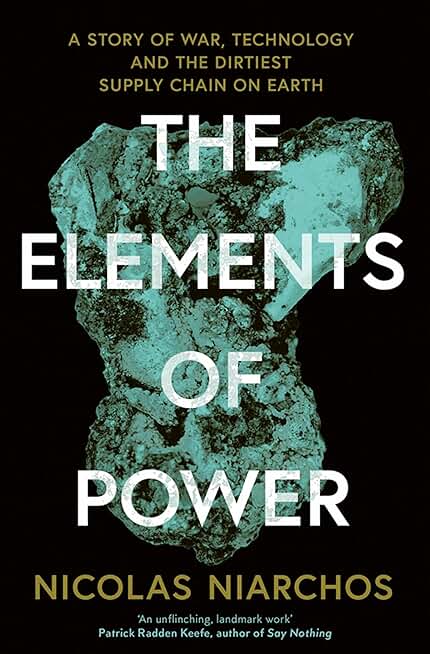
The Elements of Power: A New Yorker writer uncovers the darker side of the green revolution – 'An unflinching, landmark work' Patrick Radden Keefe
Nicolas Niarchos, a staff writer at The New Yorker, has spent years following the supply chains that power our electric vehicles and smartphones to their source, and what he found is deeply unsettling. This is not a comfortable read. It's a necessary one. The Elements of Power exposes the brutal human and environmental toll buried inside the global rush for battery metals, a story that the clean energy industry would rather you didn't examine too closely. Finalist for the 2026 Orwell Prize for Political Writing and longlisted for the Moore Prize for Human Rights Writing, the book has already drawn comparisons to the most important works of investigative non-fiction in recent memory. Patrick Radden Keefe calls it 'an unflinching, landmark work on the nature of extractive capitalism', whilst The Times invokes Joseph Conrad's withering verdict on colonial plunder in Africa, suggesting this new scramble for resources might give even that a run for its money. The Democratic Republic of the Congo sits at the centre of Niarchos's investigation. A country of staggering mineral wealth, its subsoil holds cobalt, lithium, copper, tantalum, tungsten and more. Yet its population remains among the poorest on earth, and children still descend by hand into dangerous, makeshift mines to extract the raw materials that end up inside the devices we carry in our pockets. Niarchos widens his lens considerably, travelling from Indonesia's polluted coastlines to South America's lithium flats to the Western Sahara, still treated as a resource colony rather than a sovereign territory. China, he shows, has been positioning itself in these regions for decades, building mining infrastructure and political influence whilst Western nations looked elsewhere. The United States is now scrambling to catch up, deploying sanctions and investment in equal measure. What gives the book its real weight is the reporting. This isn't desk research dressed up as investigation. Niarchos has spoken to the people whose lives are being remade by forces they have no part in shaping, and he places their stories alongside the corporate strategies and geopolitical manoeuvres that drive the whole machine. The result is a portrait of collective self-deception: wealthy nations congratulating themselves on going green whilst quietly depending on conditions they would never tolerate at home. If you own a smartphone or have ever considered buying an electric car, this book has something pointed to say to you directly.
- Author: Nicolas Niarchos
- Publisher: William Collins
- Genre: Industry-Specific Business
- ISBN: 978-0008819514
- Pages: 480 pages