
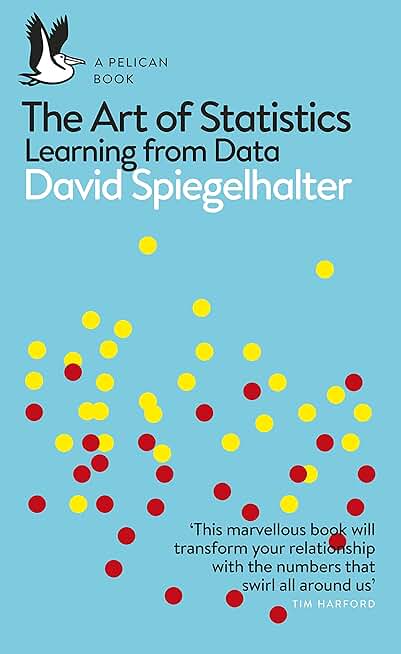
The Art of Statistics: Learning from Data
Praised by Jeremy Vine as 'a statistical national treasure' and described by Popular Science as essential reading for politicians, journalists, and medics alike, this book arrives with serious credentials. It earns them. Do busier hospitals tend to produce better outcomes for patients? How many trees exist on Earth? Why do older men develop noticeably larger ears? These are genuine questions, and David Spiegelhalter shows that only statistical thinking can properly answer them. That's a quietly radical idea, and he makes it stick. Statistics has shaped scientific understanding for centuries, yet its public reputation remains muddied by sensationalism and misuse, particularly in media coverage. As data science grows into a recognised discipline and vast quantities of information become available to almost anyone, the ability to read numbers critically has become a genuinely useful skill. Spiegelhalter guides readers through the core principles needed to extract real meaning from raw data. He uses vivid, often surprising case studies rather than abstract theory: who was statistically the luckiest survivor aboard the Titanic? Could the authorities have identified Harold Shipman as a serial killer sooner than they did? Does screening for ovarian cancer actually help women? Each example pulls you forward, curious about both the answer and the method behind it. Nature noted that the book illuminates how growing mountains of data can sharpen our understanding of the world. That's exactly right. It's rigorous without being cold, and accessible without being patronising. Warmly recommended.
- Author: DAVID SPIEGELHALTER
- Publisher: Pelican
- Genre: Economics
- ISBN: 978-0241258767
- Pages: 448 pages