
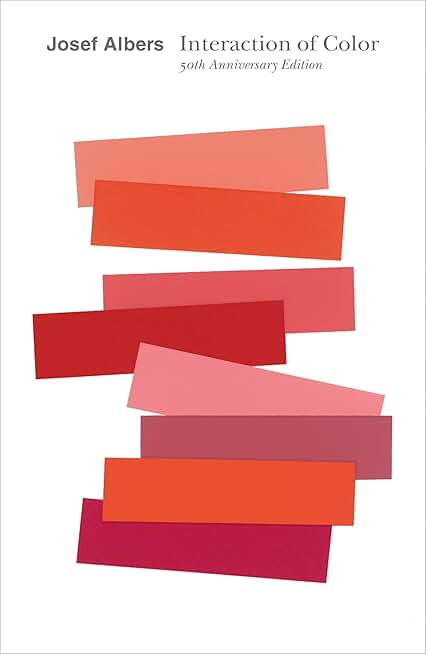
Interaction of Color
Few books about colour have earned the kind of quiet, lasting reverence that Josef Albers' 'Interaction of Color' continues to attract, decades after it first appeared. Malcolm Jones of Newsweek called it one of the most beautiful books in the world, and not without reason. It's not a manual aimed purely at artists, though generations of painters and designers have drawn heavily from its pages. It's a book for anyone curious about the mechanics of perception, about why we see what we see, and how colour behaves differently depending on what surrounds it. Robin Foley of Image Interiors and Living went so far as to call it possibly the most important book ever written on the subject. That's a bold claim, but it's hard to argue with once you've worked through its visual exercises. Designer Orla Kiely credits it as the single book that most shaped her understanding of colour. Hannes Beckmann puts it plainly: no other book combines eyesight with such profound insight. What sets Albers apart is his method. Rather than leaning on theory or abstract colour systems, his teaching is rooted in direct perception, in what your eyes actually do when confronted with shifting hues and optical puzzles. Maria Popova of Brain Pickings describes it as an indispensable guide to the art of seeing, and a cornerstone of visual literacy. Selected for the AAUP's recommended reading list for public and secondary school libraries in 2007, it sits equally well on a student's desk or a seasoned professional's shelf. Short on jargon, rich in revelation.
- Author: Josef Albers
- Publisher: Yale University Press
- Genre: Design & Fashion
- ISBN: 978-0300179354
- Pages: 192 pages